Composition.
Verification.
Record.
Three stages. Every lot. No exceptions. The Kalem quality methodology is a documented process — not a marketing claim — applied uniformly across all six formulation lines.
Seven Steps from Source to Shelf.
The Kalem lot process begins before any ingredient enters the formulation studio and ends with a filed archive entry. Seven documented steps, each with a defined checkpoint that must be satisfied before the next stage opens.
Before any new ingredient supplier enters the Kalem supply chain, a material data sheet, origin documentation, and food-grade processing confirmation are required. No exceptions for existing relationships following an annual review cycle.
On delivery of each ingredient consignment, the accompanying documentation is cross-referenced against the supplier record. Consignments that arrive without matching documentation are held pending review and may not enter the formulation stage.
Ingredient ratios are calibrated against the composition specification for the lot. Calibration records note the weighing date, batch operator reference, and scale calibration certificate number. The calibration document is filed as part of the lot record.
A sample from the batch is submitted to the independent laboratory prior to encapsulation of the full lot. This early-stage submission allows elemental concentration data to be reviewed before the full production run is committed.
The laboratory performs elemental concentration analysis and issues a certificate of composition. Ingredient profiles in Kalem supplements are selected based on published nutritional research and undergo independent batch verification for quality and labelling accuracy. The certificate is filed against the lot number.
The certificate of composition data is compared against the product label declarations. Any discrepancy triggers a formulation review and a new sample submission. The lot may not proceed to packaging until label accuracy is confirmed.
The complete lot record — supplier documents, calibration notes, laboratory certificate, label accuracy confirmation — is archived under the batch code. The record is retained for a minimum of three years and is available upon request from the contact page.
The Supplier Requirement Set.
Active ingredients are sourced from documented suppliers, with each batch accompanied by a certificate of composition. Sourcing prioritises suppliers whose facilities maintain food-grade processing standards. The requirement set below applies uniformly — no supplier is exempt from any item.
Where possible, Kalem works with suppliers operating within Southeast Asia. This regional preference is not a marketing position — it is a supply-chain decision that shortens the cold-chain, reduces transit documentation complexity, and supports the traceability of origin map data maintained per lot record.
Supplier relationships are subject to annual review. A change in supplier for any active ingredient in any formulation line triggers an immediate requirement for a new certificate of composition before the revised lot may proceed to distribution.
The Independent Laboratory Process.
Sample Submission Protocol
A pre-encapsulation sample is submitted alongside the formulation calibration record and the relevant supplier material data sheets. The laboratory receives the full ingredient origin context alongside the physical sample.
Elemental Concentration Analysis
The laboratory performs elemental concentration analysis of the submitted sample. The analysis verifies that each declared ingredient is present at or near the stated concentration per serving. Variance tolerance and analysis methodology details are available from the laboratory on request.
Certificate Issuance and Filing
The laboratory issues a certificate of composition. This certificate is filed against the lot number in the Kalem archive. It becomes the primary reference document for the label accuracy check in the subsequent stage of the lot process. Certificates are retained for a minimum of three years.
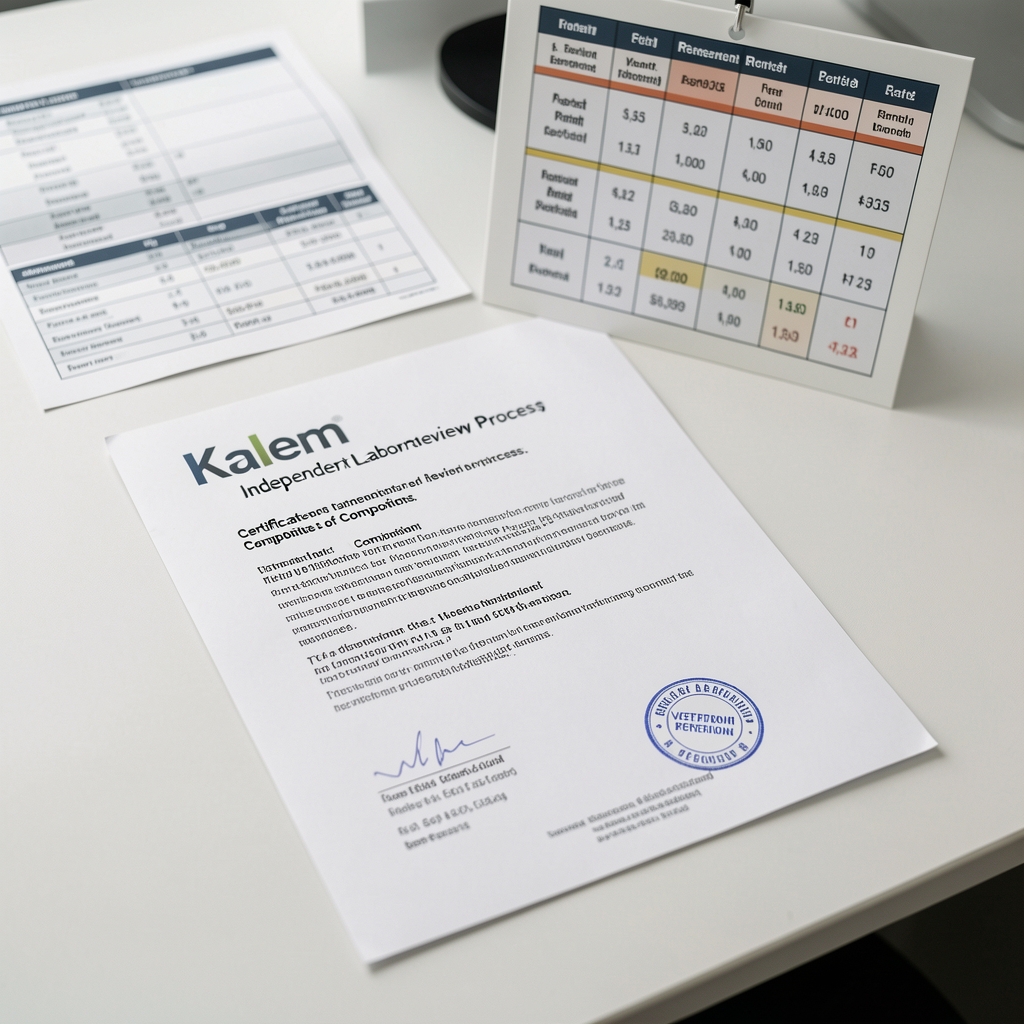
The independent laboratory relationship is arm's-length. No Kalem personnel are present during analysis. The certificate is transmitted directly from the laboratory to the Kalem archive without intermediary handling.
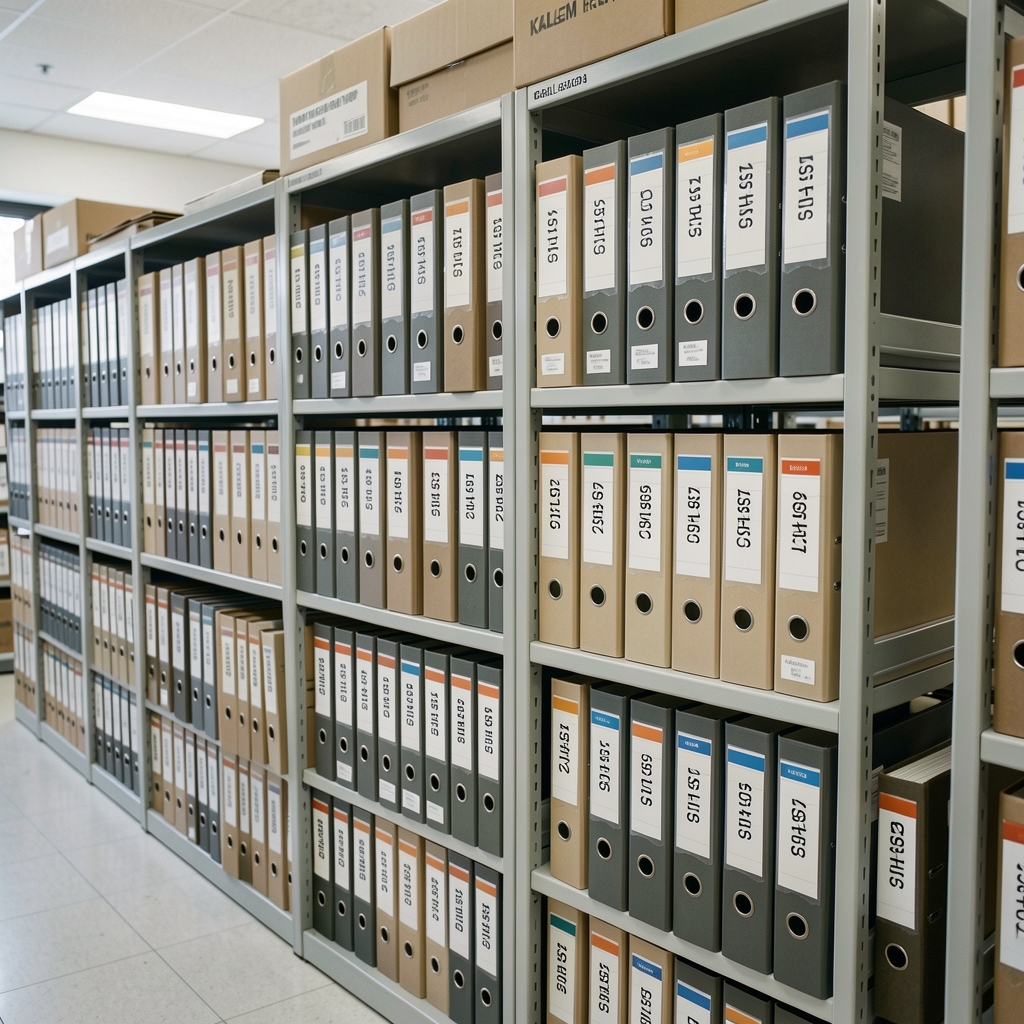
The lot record system assigns a unique alphanumeric code to each production batch. The code appears on the product label, in the certificate of composition, and in the archive entry — providing a single reference point for any documentation request.
The Lot Record Structure.
Each Kalem lot record is a revision-controlled document package. The revision numbering system — inherited from the founding document structure established in 2021 — allows each version of any lot-related document to be individually referenced and retrieved.
Documentation requests are handled through the contact page. Standard documentation packages — including the certificate of composition and elemental concentration data from the independent laboratory review — are available to customers who include the lot code from their product label in the request.
Wholesale partners receive extended documentation access, including supplier material data sheets and calibration records, as part of the standard wholesale onboarding package.
Classification and Registration.
Kalem products are nutritional food-supplements registered with the applicable local regulatory authority under food-supplement classification. Products meet compositional and labelling requirements for nutritional supplement categories applicable in Indonesia.
All labelling and compositional declarations conform to the applicable nutritional supplement labelling standards. The lot record system — including batch coding and certificate of composition requirements — was designed in part to ensure that labelling accuracy is independently verified rather than self-declared.
Ingredient profiles in Kalem supplements are selected based on published nutritional research and undergo independent batch verification for quality and labelling accuracy. We recommend speaking with a qualified wellness or nutrition professional before introducing any supplement to your daily routine, particularly if you have specific dietary requirements.
About the Methodology.
Questions about the lot process, supplier criteria, and documentation access — answered without ambiguity.
Request Your Lot Record.
Include the lot code from your product label in your message.